Communicating with items in a hierarchy allows you to:
-
See how items are connected
-
Explain how items fit into the context of bigger-picture work
-
Highlight how combined efforts help deliver complex projects
The Hierarchy view shows items in their hierarchy from Jira.
Hierarchy configured in Jira
Easy Agile Roadmaps uses the work type hierarchy configured for your Jira Cloud site.
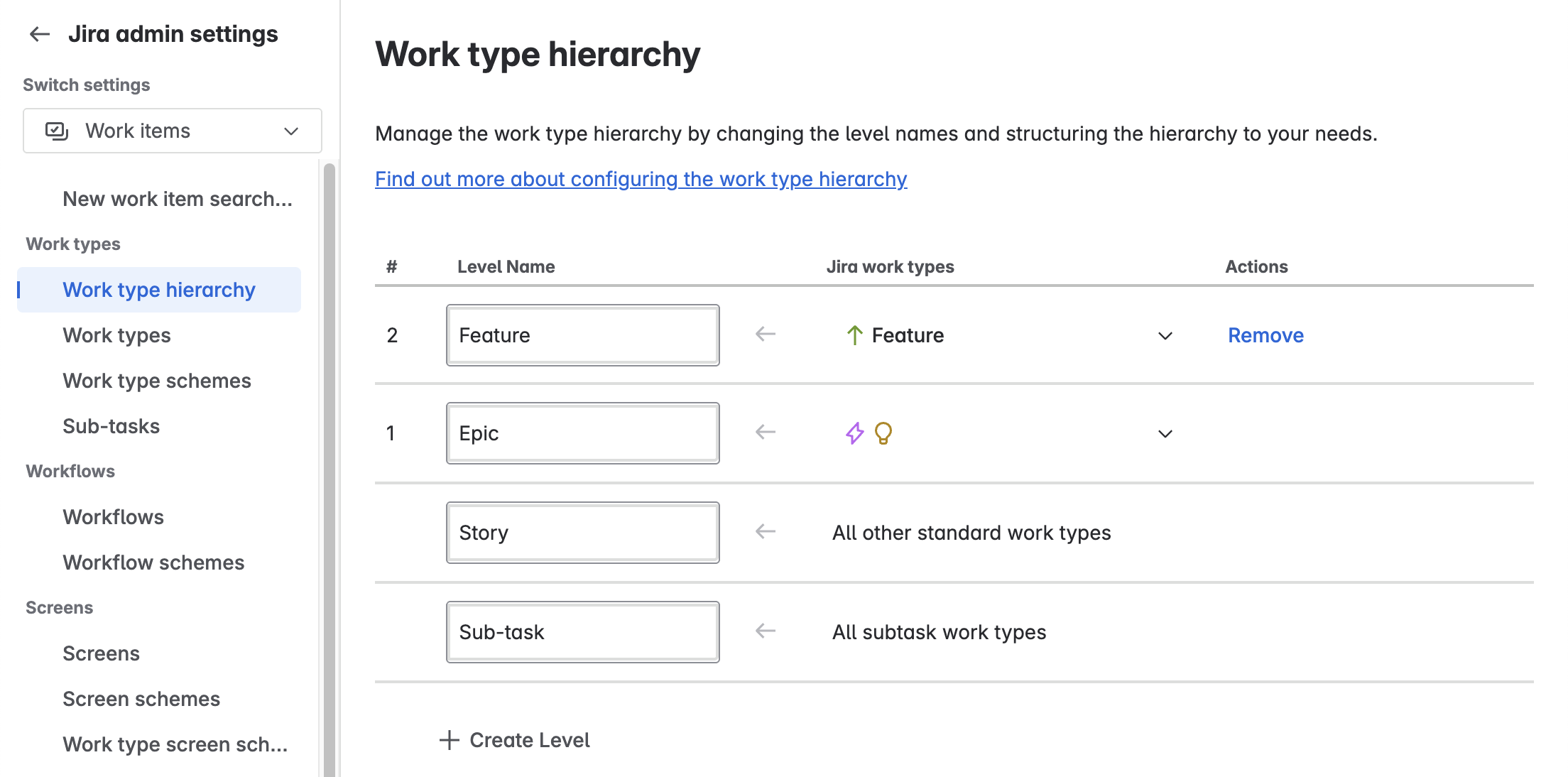
Jira Administrators can change the hierarchy in Jira’s global settings.
Subtasks are not shown on the roadmap.
On Jira Cloud Standard or Free, it isn’t possible to change the Epic level of the hierarchy or add additional levels above Epic. You can only rename existing levels and work types.
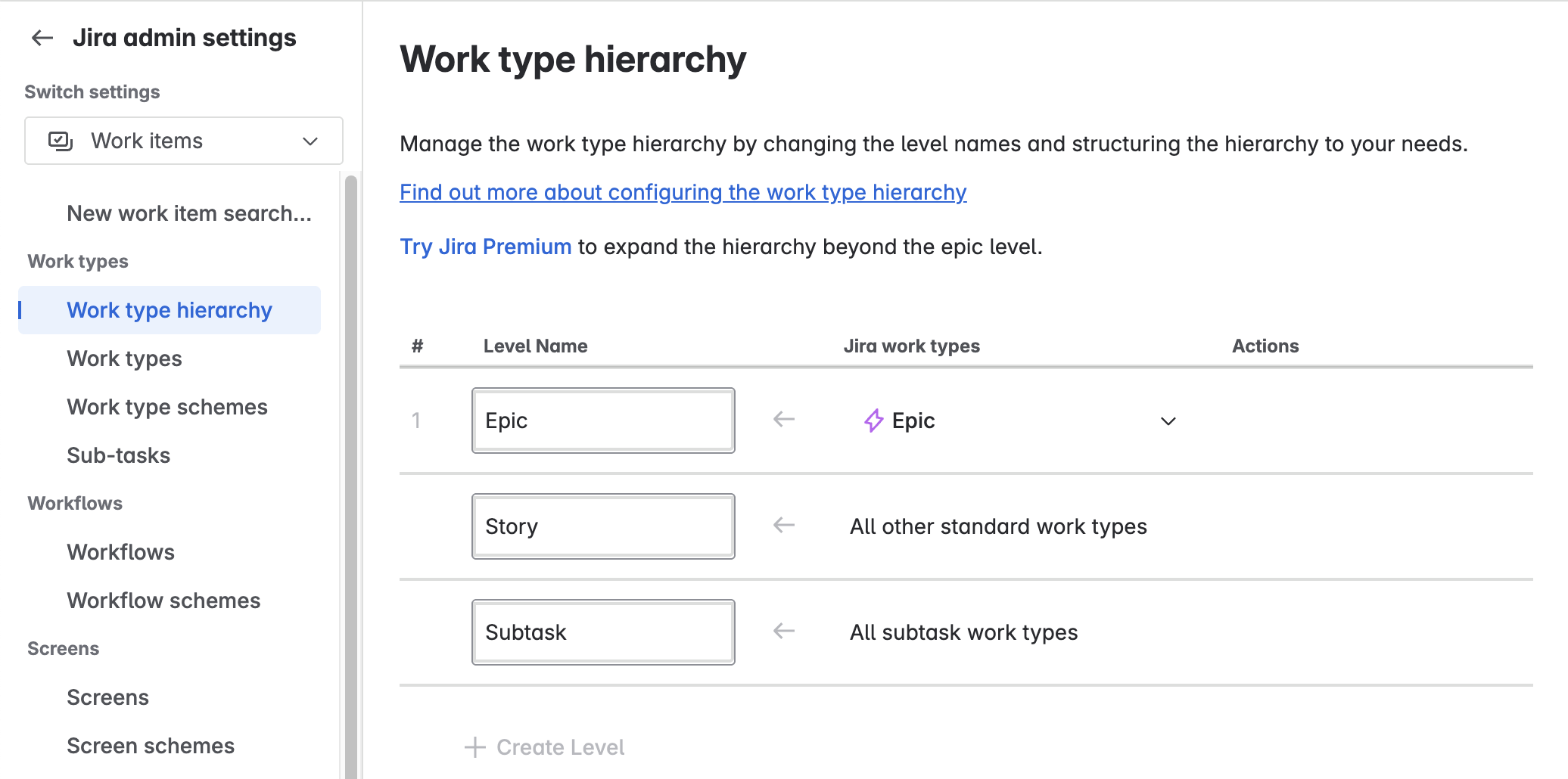
This means Easy Agile Roadmaps will only show Epics and standard-/story-level items.
Hierarchy on the roadmap
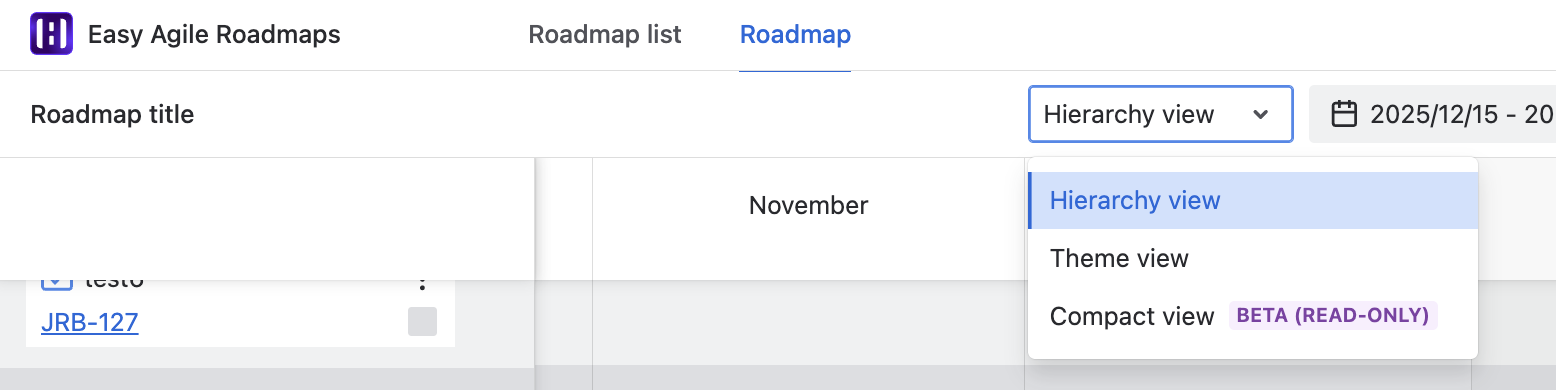
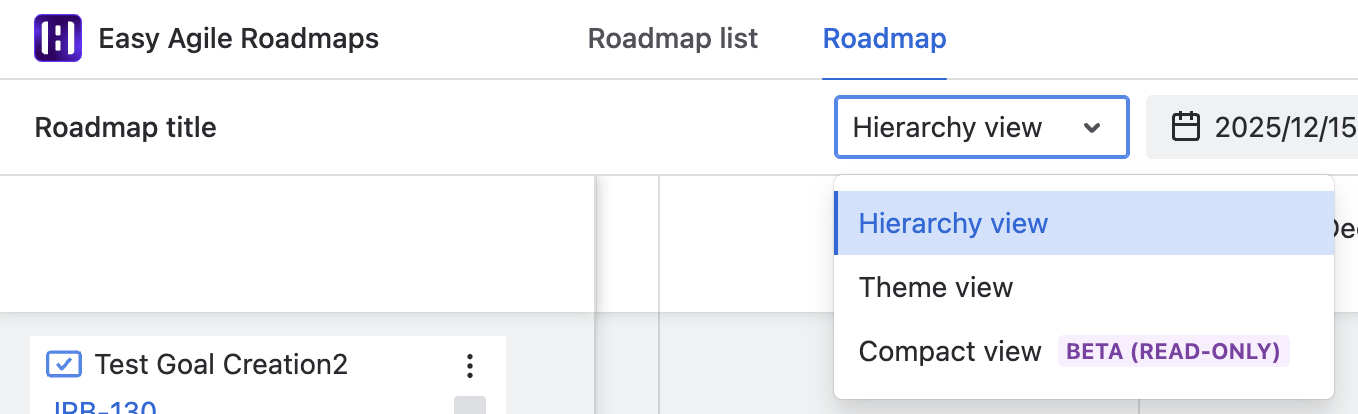
Switch to the hierarchy view from the toolbar
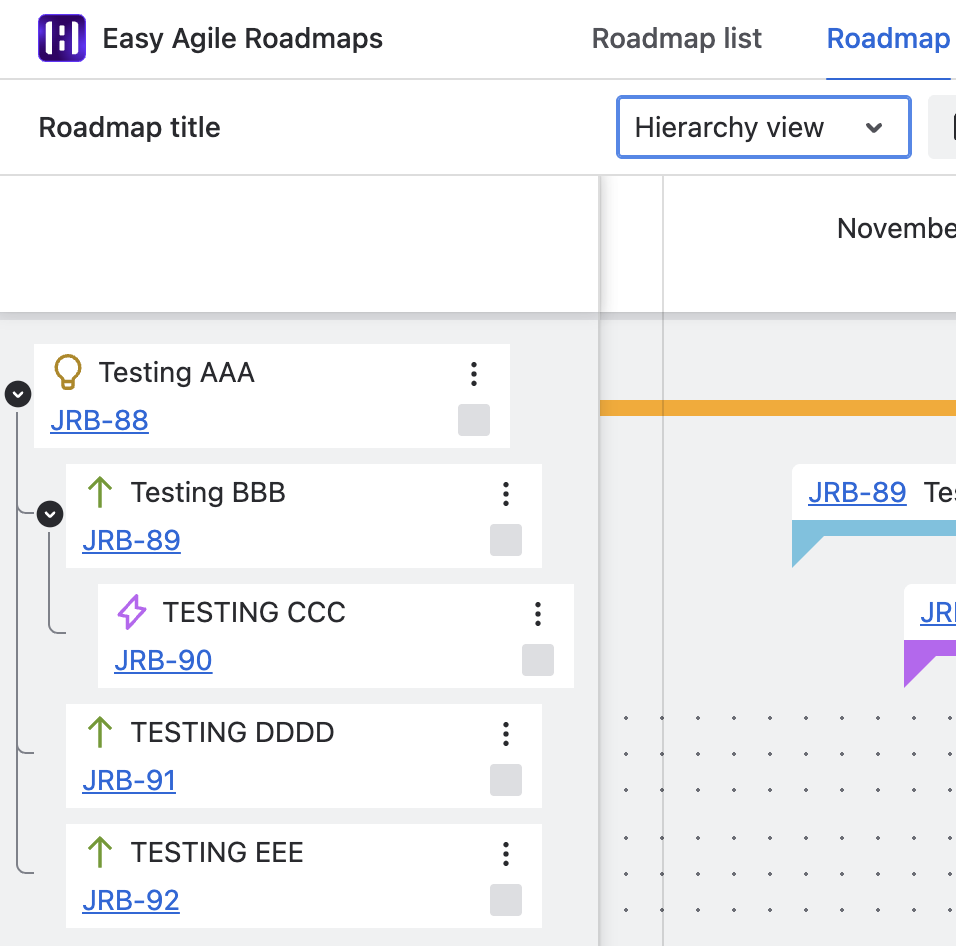
The work item panel
In hierarchy mode, work items will be displayed in a tree view. This shows each work item in its place in the hierarchy.
-
Collapse or expand sections of the hierarchy by clicking on the tree lines or arrows.
Unscheduled work items can show in the hierarchy panel if their parent or child items are scheduled. This enables the app to show a complete picture of the hierarchy.
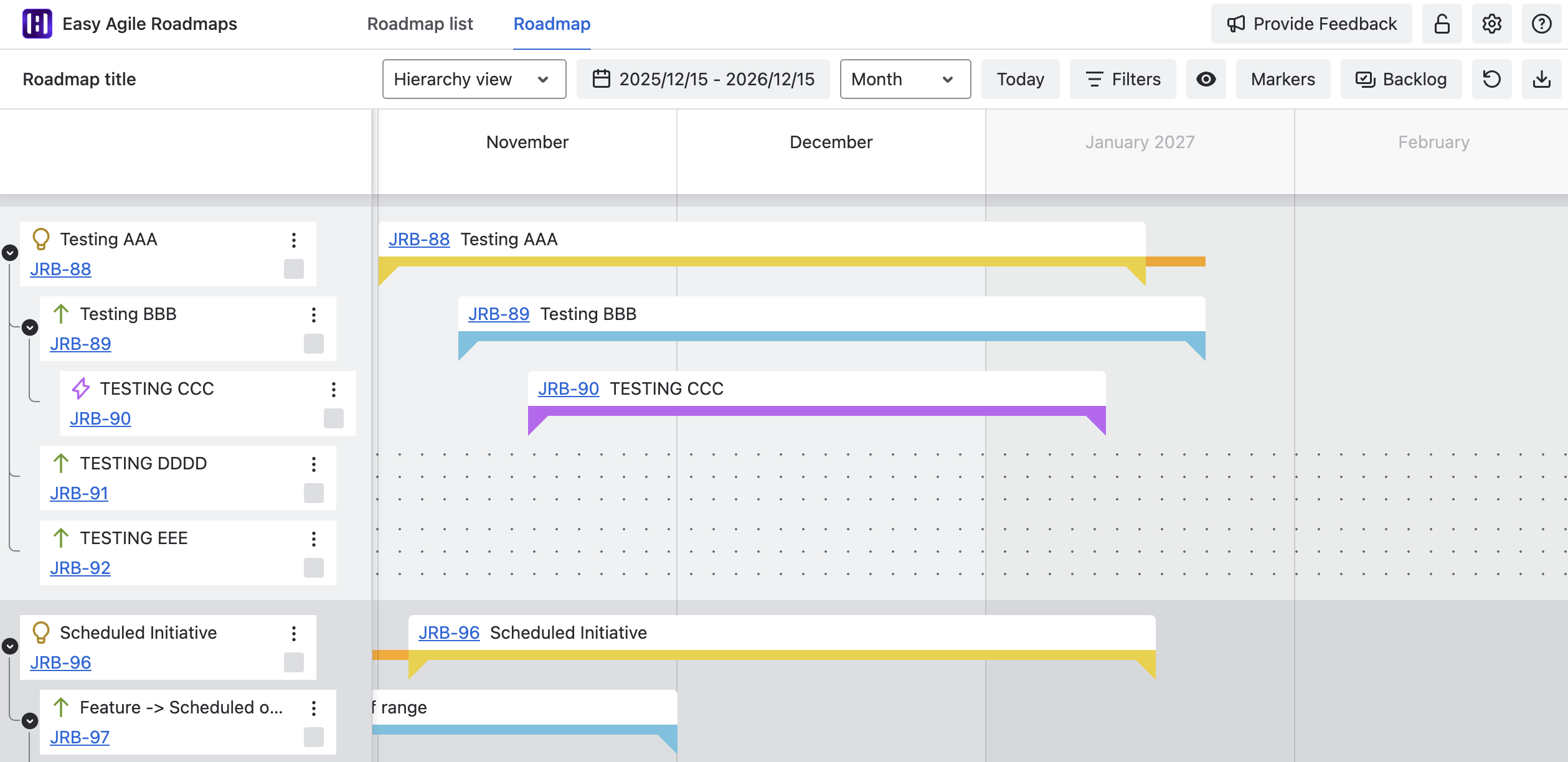
Hierarchy on the timeline
With hierarchy view, items will appear underneath their parent items.
-
Different colours are used to show different hierarchy levels.
-
An orange warning bar will extend outside an work item’s date period if any child items are scheduled outside those dates.

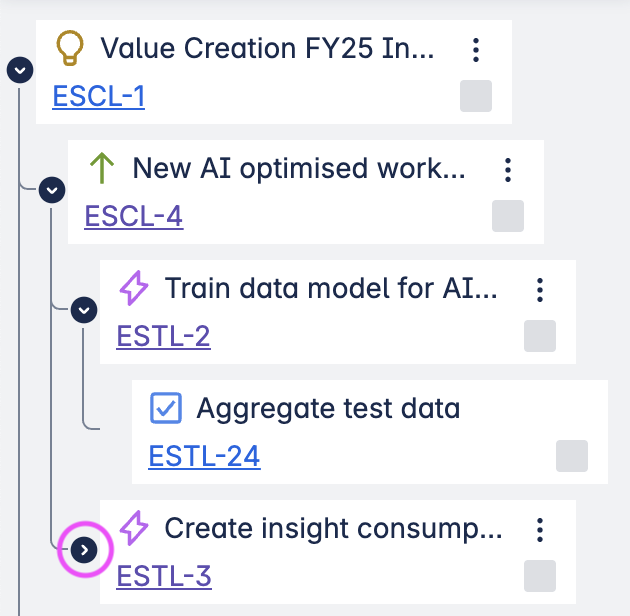
Level 1 work items (stories and other standard-level items) are collapsed by default.
-
Show level 1 work items for an epic by clicking on the arrow on the left side of an epic.
-
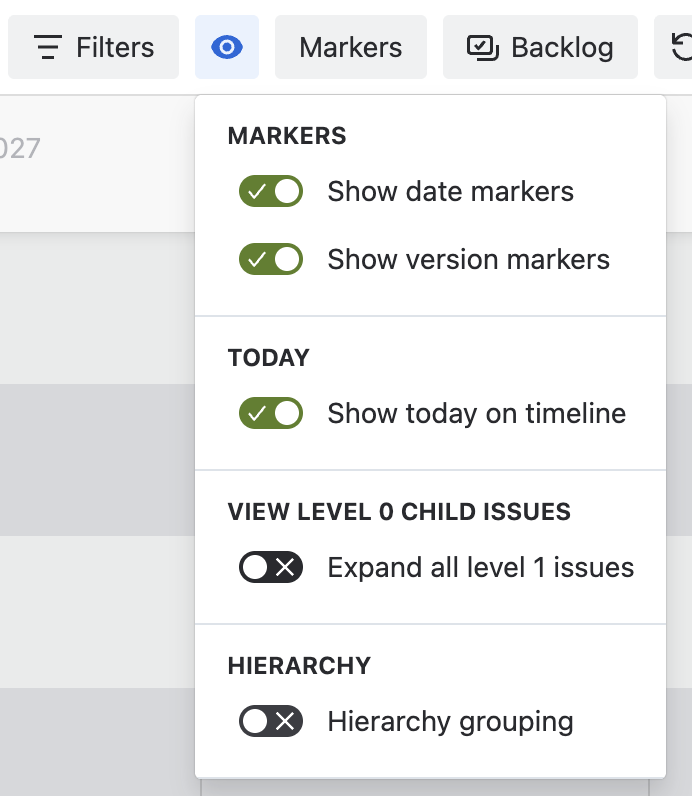
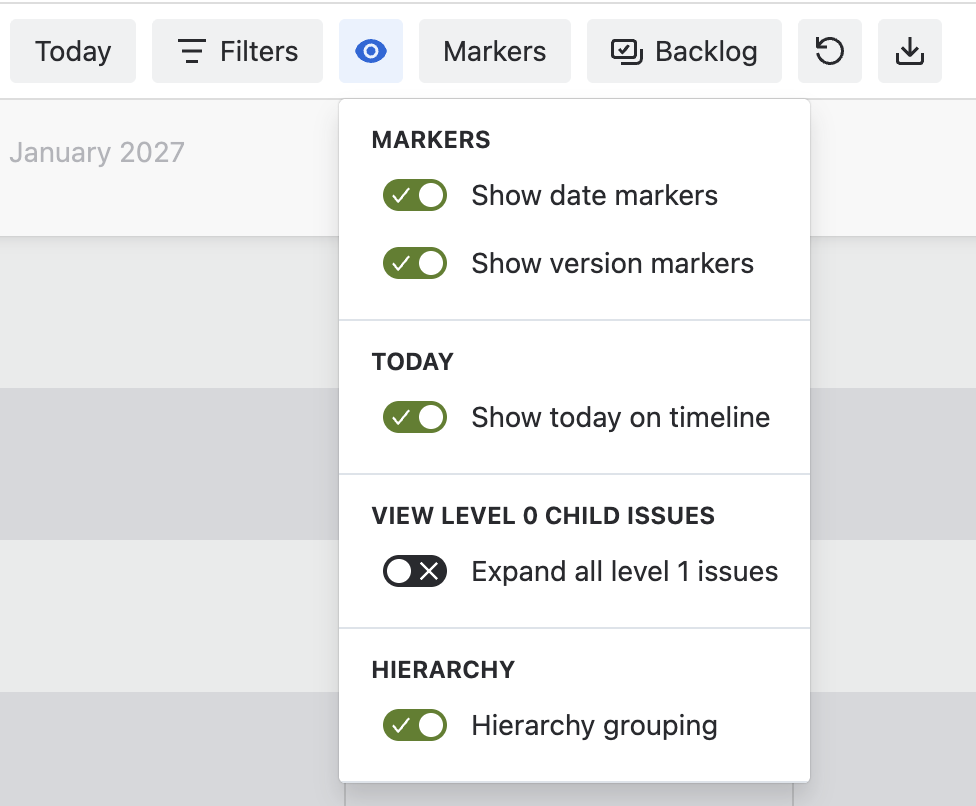
Expand all level 1 work items using the toggle in the “View” menu.
Hierarchy grouping
Toggle on ‘Hierarchy grouping’ to visualise how item schedules align with other items in the same hierarchy.

Hide hierarchy groupings from the view menu in the toolbar